
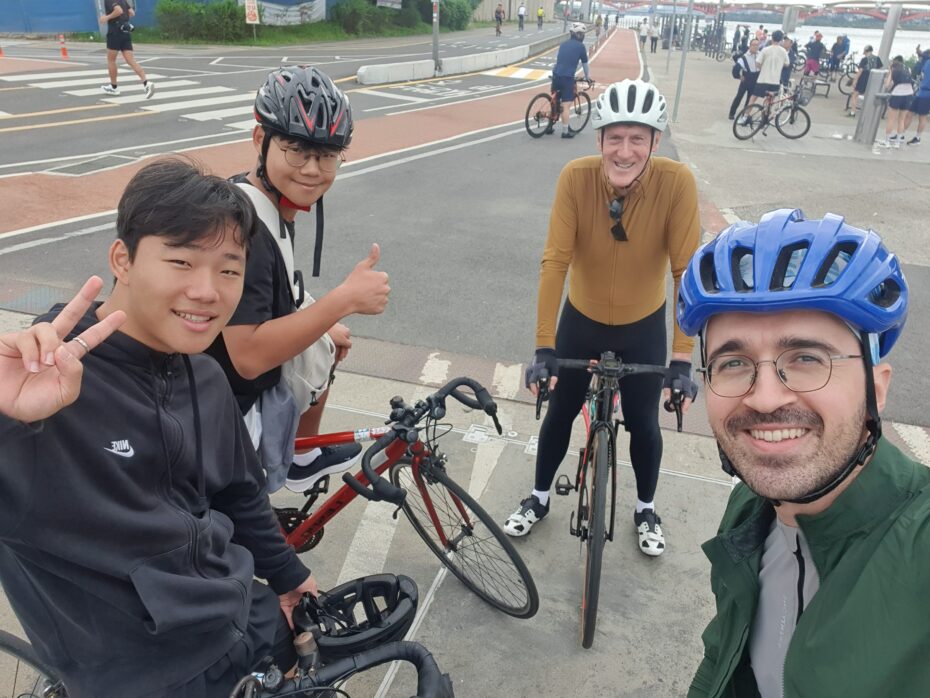
Dorim Cultural Center offers professional and spiritual formation to university students in Seoul, South Korea. ACI has provided grants totaling $12,000 since 2023 to assist with the renovation of their building. For information on how to contribute to ACI’s Dorim Project, please see the note at the end of this article.
Life in South Korea is fast-paced, modern and high tech.
It is also a place of tremendous stress.
When a team of people moved to Seoul 17 years ago with the mission of setting up a men’s cultural center, they noticed the atmosphere of pressure and strain right away. The center they created, the Dorim Cultural Center, tries to provide a space for the development of the whole person. This center primarily serves male university students.
“Our center tries to provide a family life with a very human approach,” said Jaime Aguilo, director of Dorim Cultural Center.
“The challenge for us is to give the students hope,” he said.
A Nation on the Edge
South Korea is nation of many extremes: it has the best health care system in the world, but it is also the nation with the 12th highest suicide rate. In 2025, it had the lowest birth rate in the world, which measured 0.8 children per woman, and the highest life expectancy in the world, at 83.7 years of age.
If things do not change demographically, South Korea’s population of 51.8 million is expected to contract by almost a third to 36.2 million by 2072.
The Korean peninsula was literally cut in half by the Korean War, from 1950 to 1953, when the nation split between North and South Korea. This war left 3 million Koreans dead and a ruined economy. Yet a culture of excellence and hard work turned the Southern nation around. Today, South Korea is considered one of the most advanced economies and democracies in Asia. It is ranked 14th in the world by nominal GDP.
However, the frenetic pace of life takes its toll every day.
Young people in South Korea are expected to go to Hagwons, or cram schools. The average student, from grades 1 through 12, goes to Hagwon for 7.5 hours per week. 78% of South Korean parents enroll their children in these private schools because of the extreme competition for education and jobs.
“One of the biggest challenges we see is that people are very stressed here and very consumeristic. There is a great fear of making mistakes,” said Aguilo.
This fear makes life somewhat bleak for the average South Korean.
“Many young people in South Korea, especially university students, seem to live with very little room to relax,” said Kim Taewan, a 22-year-old Electronic Engineering student. “From a young age, they become accustomed to an environment centered on exams and competition, so they often feel busy and under pressure.”
One of the challenges that many young South Koreans face is feeling alone.
“Most young people feel lonely, even in a crowd,” said Jungmin Jimmy Kim, a 32-year-old English tutor, who has been living at Dorim during this past year. “They feel disconnected from real social ties these days and are constantly playing the comparison game because of social media. It seems like they don’t really know how to unplug from it all.”
A Place of True Friendship
The Dorim Cultural Center is a 5-story building which was purchased in 2019 and renovated between 2022 to 2023, with the help of many benefactors, including a grant from ACI. It is located 30 minutes by subway from the nearest universities. Besides the residential rooms for 16 people, about 500 people attend activities every month at Dorim, including 150 students and 50 professionals.
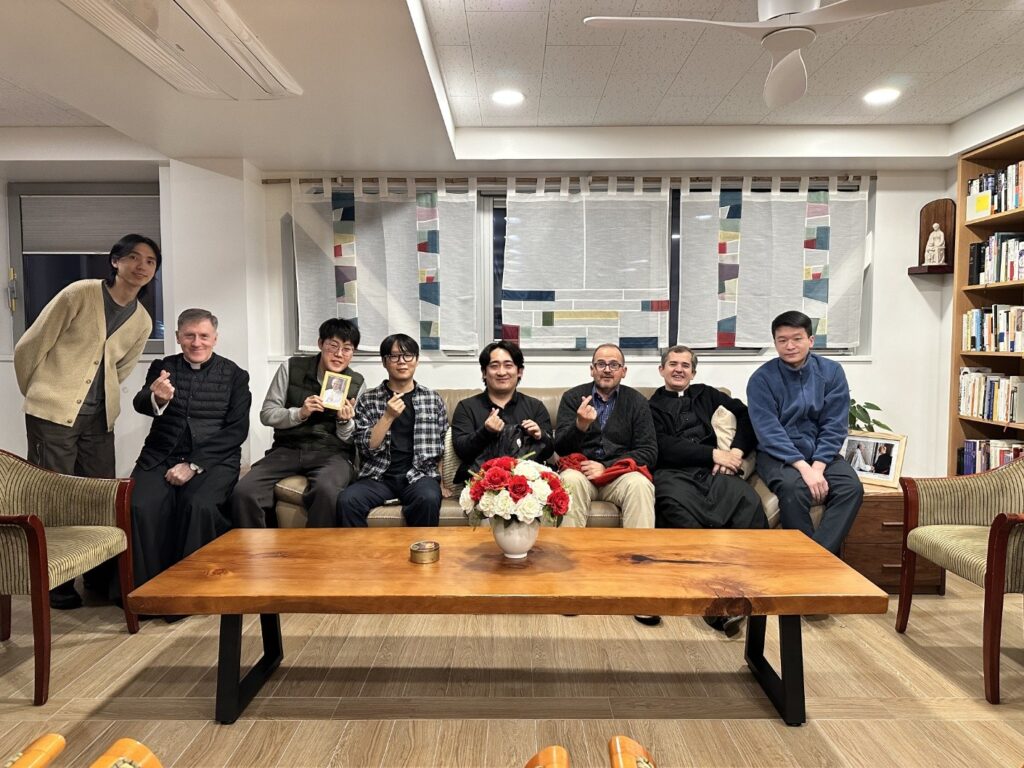
“Our main activities are geared towards university students,” said Aguilo. “We see that many of the students are very shy.”
One of the greatest benefits for residents or participants in the Dorim Cultural Center is the quality of friendships that are made there.
“Thankfully, I’ve made many friends who feel like family in Dorim. Everyone is so kind to me, and I’m really grateful,” said Jimmy. “Also, I’m planning to study abroad. Living with them helped me get used to being around foreigners. So, my fear has completely disappeared.”
The students learn how to live well in community.
“Professor Jaime Aguiló Pastrana, who is the head of our center, wears a T-shirt with the saying, ‘Living for Others’,” said Koh Junghoon, a 25-year-old Masters’ student in Chemistry Engineering. “I am currently learning the lesson of ‘living for others’ at the center. I think the center has helped me become more extroverted. All the members of the center have become great friends to me.”
“Dorim Cultural Center seems to be a place where one can slow down for a moment and experience a sense of calm,” said Taewan. “Living together with others also teaches me to look beyond myself and to care for the people around me. Through these experiences, I am gradually learning the value of community and the importance of understanding others.”
Mentoring Others on Family and Marriage Issues
Dorim Cultural Center provides mentoring to all of the participants who either live or come to the center. This is something that Dorim participants greatly appreciate.
“Dorim is full of amazing mentors, like the fathers and various professors, who really care,” said Jimmy. “It creates a vibe where it’s easy to open up. It helps you feel like someone’s always got your back.”
There is a great fear among South Koreans about getting married and starting a family. This stems from a fear of economic hardships to a general fear about taking risks.
For young, unmarried couples, Dorim offers a “Couple’s Coffee” where men and women come together to discuss relationship issues. This is part of an international course, created by the International Federation for Family Development (IFFD).
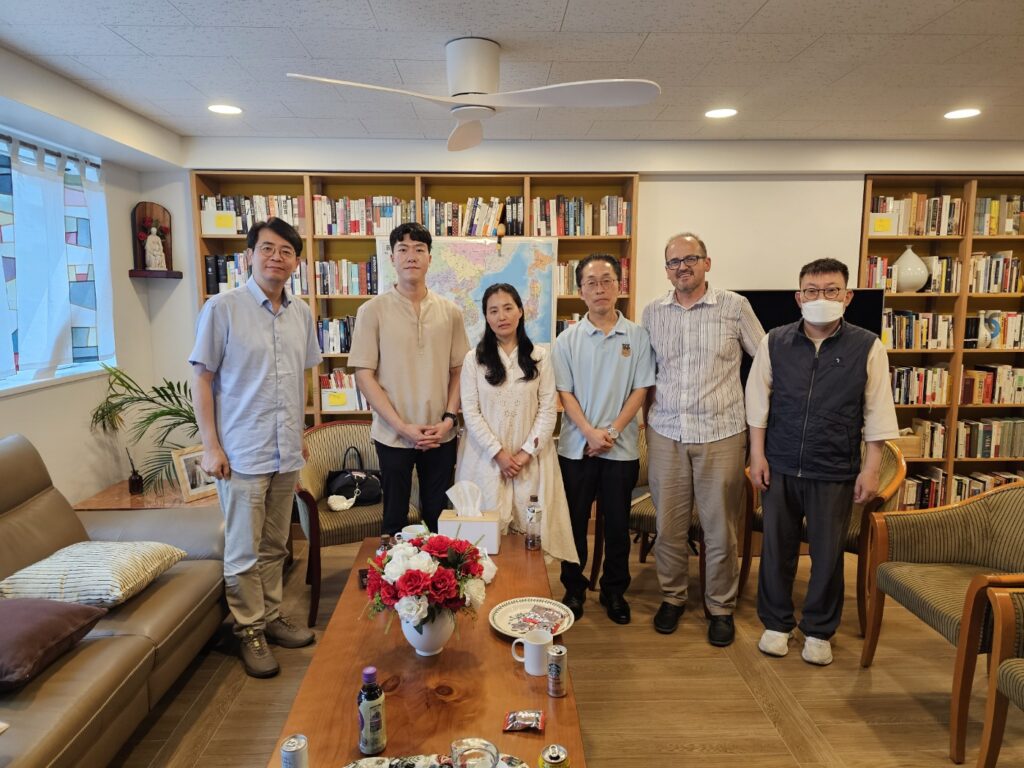
“It is helpful for young couples to meet other people, and also to see the examples of other couples. They see what the others are doing and think, ‘I can try this’,” said Aguilo.
The current reality is that the vast majority of South Koreans have very small families.
“The only families we know with three children are older families. We don’t know any young families with three children,” said Aguilo. “In the countryside, you might see larger families, but not in Seoul. Seoul is quite hectic.”
At Dorim, there is a big effort to make the atmosphere very relaxed, so that there is time to discuss how beautiful family life can be.
Business and Spiritual Activities
There is a business club for students which meets in the Dorim Cultural Center classroom.
“Every two months, we have 15-20 people meet at Dorim. We invite different businessmen to speak to the students about their careers. We allow time for questions and answers,” said Aguilo.
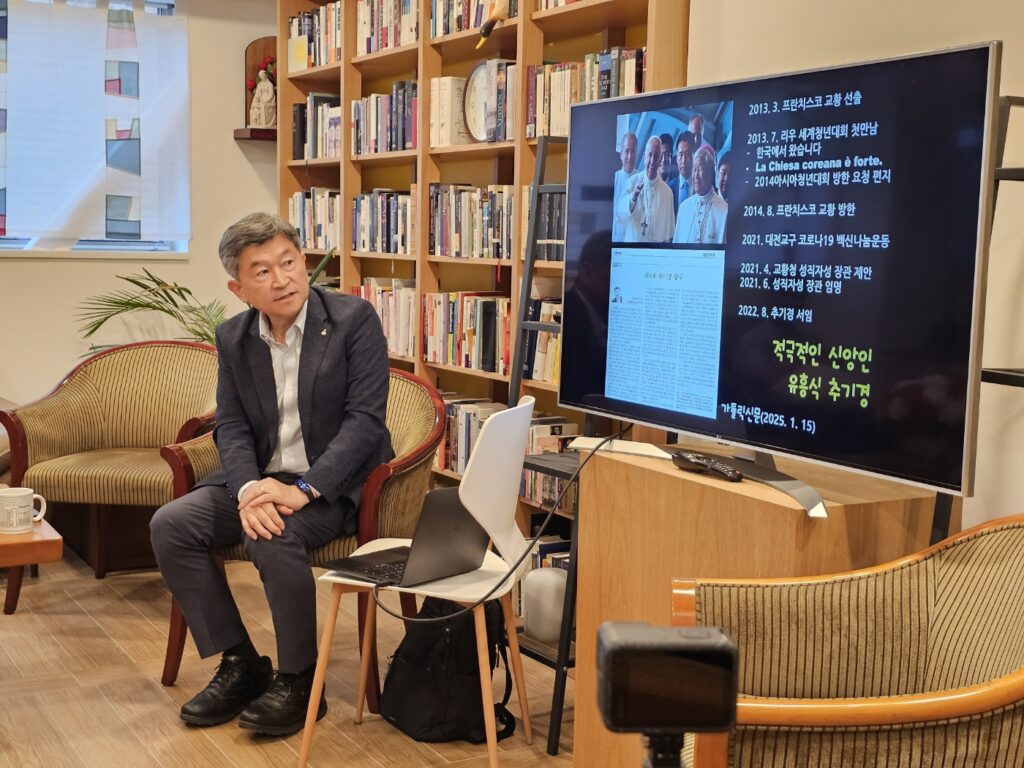
Dorim also has small Spanish classes for professionals, as well as English.
“An instructor of English is organizing a class for 4 or 5 attendants, and one of them is Jimmy, one of the residents,” said Aguilo.
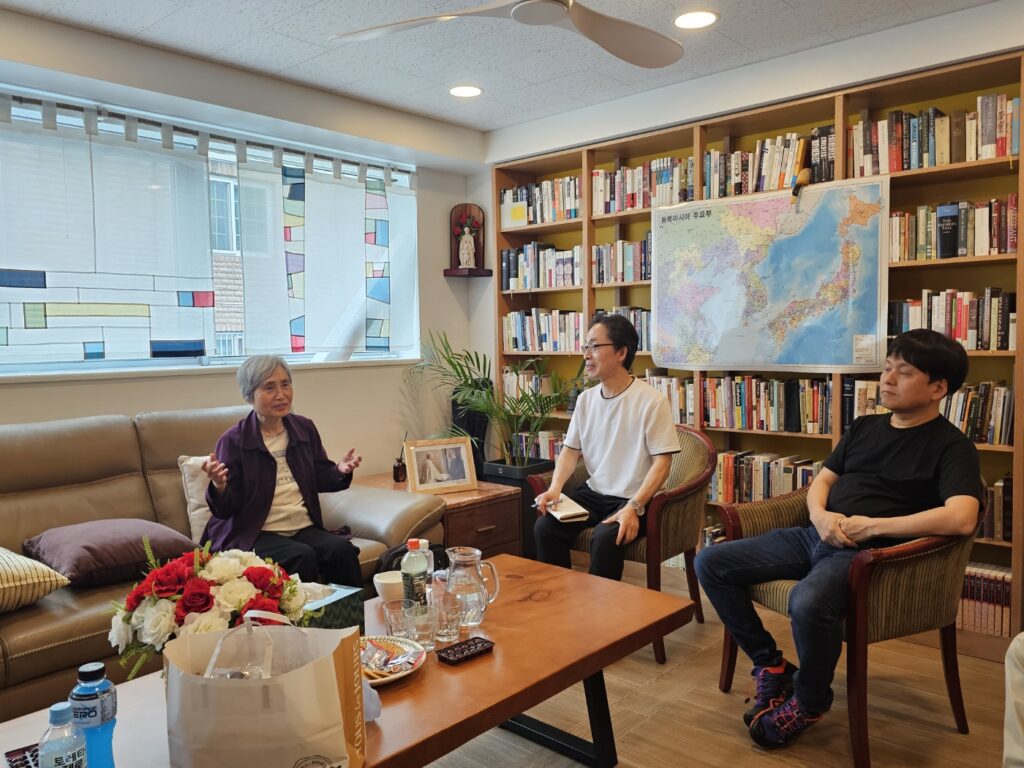
Because Dorim is a center inspired by the Catholic faith, there are also classes for spiritual formation organized by age-group.
“We rent a room near the Cathedral of Seoul,” said Aguilo. “On Tuesday evenings, we organize recollections in the small chapel there. We have had this space for 15 years.”
Two Spanish priests associated with the Dorim Cultural Center participate in these recollections.
Community Service
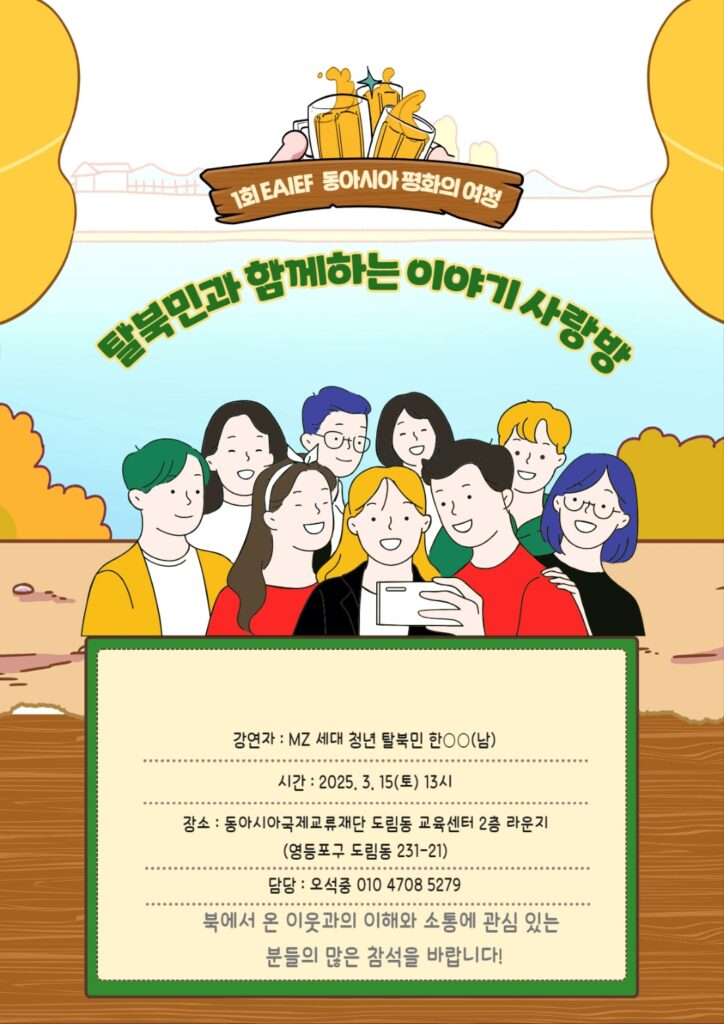
The Dorim Cultural Center also has an activity to help North Korean refugees.
“We have an activity where we help refugees who have fled North Korea through China. They speak to us about their experiences. We have done this 4 times already. Their stories are really shocking,” said Aguilo.
The organizers of Dorim meet every three months with one North Korean refugee on Saturdays. During these meetings, the North Korean refugee tells his or her story. After this, the audience can ask questions.
Learning How to Slow Down
The greatest challenge for the organizers of Dorim Cultural Center is to get South Korean students to relax and face life with trust and peace. They also want the students to see that life is more than just academic degrees, or objects that can be purchased.
“People here invest a great deal in their education. They study a lot. They want to have a good curriculum. Then, after they finish their education, they really want to have a good career. But it is a big challenge, because it can become kind of materialistic,” said Aguilo.
Not all the residents of Dorim practice a religious faith, but all appreciate the values being taught there.
“To be honest, I’m not religious,” said Jimmy. “But thanks to the priests at Dorim, I’ve learned that there are still genuinely good role models out there.”
For those who are religious, Dorim has been an opportunity to deepen their faith.
“I think one of the problems young people in South Korea face is fear about the uncertainty of the future. Even electrons follow Heisenberg’s Uncertainty Principle,” said Junghoon, laughing. “The Dorim Cultural Center always reminds me that Jesus Christ is with us in our daily lives. With this faith, I have started to overcome some of the stress about the uncertainty of the future, because God will always guide me in His good way.”
Little by little, the Dorim Cultural Center has shown a light in South Korea. For the people who moved here 17 years ago and are giving their lives to this project, their time has been well spent.
“Teaching them these values is worthwhile,” said Aguilo.
How to contribute:
-
By Check payable to “ACI, Inc.”, memo: “EAIEF (Dorim)”, and mailed to:
Association for Cultural Interchange, Inc.
420 Lexington Avenue, Suite 300
New York, NY 10170
-
Or Email us at [email protected] for instructions about sending a wire transfer or other forms of payment.